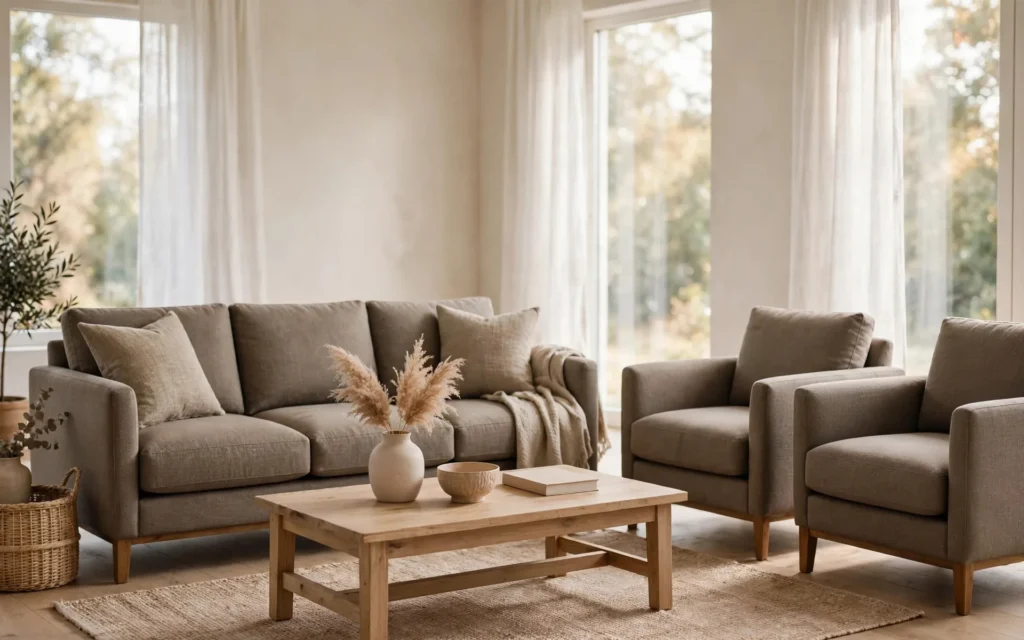
“What will I get for my sofa?” It’s the first question every seller asks — and the honest answer is: it depends. But it doesn’t depend on mystery. Professional furniture buyers weigh the same set of factors for every piece, and understanding them helps you set realistic expectations and present your furniture in the best light.
Here are the seven factors that matter most.
1. Brand and Build Quality
This is the single biggest driver of resale value. Furniture from recognised brands — especially brands known for durability — holds its value far better than unbranded or budget pieces. Why? Because the next buyer trusts the name, and the construction usually justifies that trust: solid joinery, quality hardware, and frames built to last.
That said, unbranded solid-wood furniture can still do well. Build quality speaks for itself in photos — thick timber, dovetailed drawers, and sturdy frames are visible even without a label. If your piece has a brand label or tag, photograph it; it genuinely helps your valuation.
2. Condition
Condition is where most valuations are won or lost. Buyers look at:
- Upholstery — stains, tears, fading, and odours (smoke and pets are the usual culprits)
- Surfaces — scratches, chips, burns, heat rings, and water damage on wood, glass, and marble
- Structure — wobbly legs, sagging cushions, broken slats, loose joints
- Mechanisms — recliners that recline, drawers that slide, extendable tables that extend
Here’s the nuance: light, honest wear is normal and expected — nobody expects a three-year-old sofa to look showroom-new. What hurts value is damage that’s expensive or impossible to fix: deep stains, cracked glass, broken frames, warped panels. And the golden rule: photograph damage honestly. A buyer who discovers undisclosed damage at collection will revise the offer down — or walk away. A buyer who sees it upfront builds it into a fair first offer.
3. Age
Newer furniture generally commands higher prices, for the obvious reason that it has more usable life ahead of it. A two-year-old sofa in good shape will almost always be valued above an identical eight-year-old one.
But age isn’t everything. Quality classics — solid-wood dining sets, well-made leather sofas, timeless designs — can hold value for many years. And in some cases, age barely matters: a sturdy bookshelf is a sturdy bookshelf whether it’s three or ten years old, as long as it’s straight and unmarked.
If you know when you bought the piece, say so. “About two years old” is genuinely useful information for a valuation.
4. Materials
What your furniture is made of matters enormously:
- Solid wood (oak, teak, walnut, mango) holds value best — it’s durable, repairable, and always in demand
- Genuine leather outvalues leatherette and fabric on sofas and chairs, provided it’s in good condition
- Marble and stone tops on dining and coffee tables command strong prices
- Quality engineered wood with good finishes does respectably
- Basic particleboard and thin laminates sit at the lower end — they’re harder to repair and less durable
This is also why material close-ups in your photos matter. A buyer who can see real wood grain or genuine leather texture can value with confidence.
5. Completeness
A dining table with all six of its chairs is worth more than the table alone. A bed with its matching headboard, a dressing table with its mirror and stool, a workstation with its chair — complete sets are easier to place with the next buyer, and that convenience is reflected in the offer.
If you’re missing pieces (two chairs lost from a six-seater set, a nightstand gone from a pair), be upfront about it. Partial sets still sell — just at a lower value than complete ones.
6. Style and Design
Taste changes, and resale markets follow. Right now in the UAE, clean contemporary lines, neutral colours, and minimalist designs are in strongest demand — they suit the widest range of homes. Very ornate, heavily traditional, or strongly dated styles (think bulky 90s silhouettes) are harder to place and valued accordingly.
That doesn’t mean distinctive pieces can’t sell. It just means mainstream, versatile designs have the broadest market — and the broadest market supports the strongest offers.
7. Current Demand
Finally, there’s the market itself. Some categories are simply hotter than others at any given moment — driven by moving seasons, office openings and closures, and hospitality refits. A buyer who knows they can place your 6-seater dining set this week can offer more confidently than for a niche piece with a smaller audience.
You can’t control this factor, but you can benefit from timing: the UAE’s peak moving periods (summer and year-end, when many tenancies turn over) tend to be active markets for used furniture in both directions.
Putting It Together: How to Maximise Your Offer
You can’t change your furniture’s brand or age — but you can influence the valuation:
- Clean everything before photographing — vacuum upholstery, wipe surfaces, polish wood
- Photograph honestly and well — good light, full views, close-ups of damage
- Gather details — brand names, purchase dates, dimensions, what’s included
- Sell complete sets together — don’t split the dining chairs from the table
- Be realistic — a fair offer reflects what the piece genuinely is, not what you paid for it new
Understanding these seven factors won’t just help you get a better price — it’ll help you recognise a fair offer when you see one.
Ready to find out what your furniture is worth? We buy every kind of used furniture — home, office, and hotel pieces — from every city across the UAE.
WhatsApp: +971 55 696 1430
Email: info@bestfurnituresbuyer.com